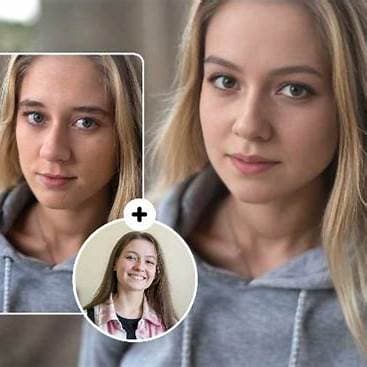
Marketing Personalization
Swap campaign faces to localize visuals for every audience segment.
Desktop AI faceswap software like DeepFaceLab and FaceSwap require GPU hardware, Python environments, hours of setup, and ongoing maintenance. Cloud-based web tools have now reached comparable output quality for most use cases — with zero installation. Here is the full breakdown.
Try the web version — no installHyper-realistic face swaps in seconds across photos and short-form video.
Photo swaps under
< 10s
Video support
1080p / 15s
Upcoming
Stripe plans
Drag in a photo or video with a clear forward-facing face (JPG, PNG, WEBP, MP4).
—
Provide the face you want to apply. Keep lighting and angle similar for best results.
—
Secure AI processing — your swap appears below once complete.
Explore real face swap outcomes across marketing, entertainment, commerce, and social storytelling — all produced with faceswap.com.de.
Swap campaign faces to localize visuals for every audience segment.

Demonstrate outfits and accessories on any persona in seconds.

Bring training videos to life by matching the host’s likeness perfectly.
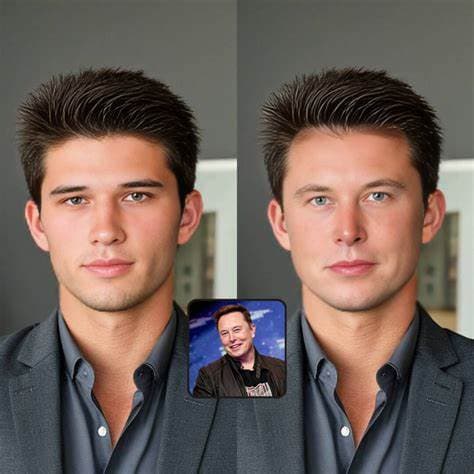
Generate polished corporate portraits consistent with your brand.
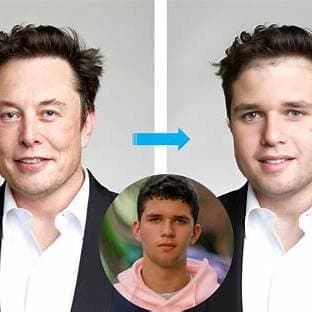
Create scroll-stopping meme reactions tailored to your community.
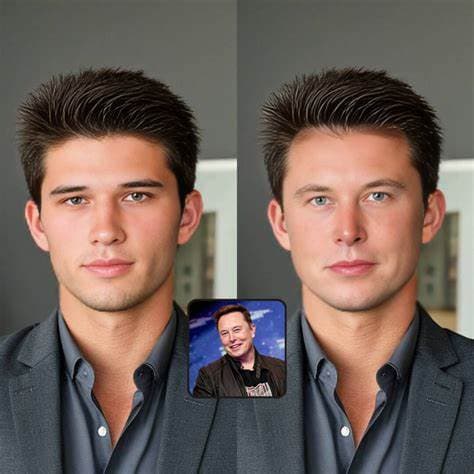
Prototype film or comic panels with rapid face replacements.
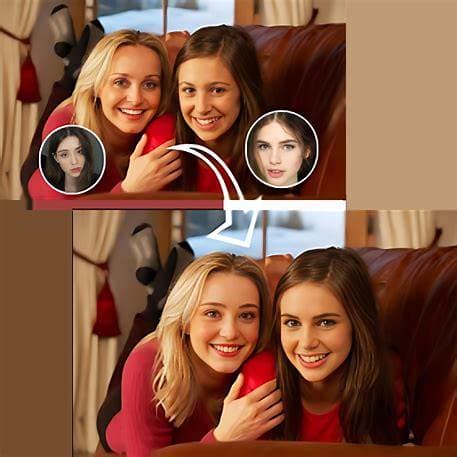
Blend streamer identities with iconic characters for collaborations.

Reimagine event footage with consistent hosts and ambassadors.

Curate editorial spreads by aligning model expressions and poses.
Unlock a world of unique effects with complete creative freedom. Explore limitless possibilities that go far beyond traditional face swapping.
Transform multiple people in one go for fast, viral-ready content.
Step into characters that match your storyboards and scripts.
Blend with anime and game avatars while retaining lifelike textures.
Explore alternate looks and perspectives with playful swaps.
Place yourself inside trending memes and GIFs instantly.
Follow this single-face workflow to render polished results in minutes.
Switch between photo or video mode, then add your source media with a clear face.
Select the face you want to apply. You can reuse faces from your library soon.
Hit the swap button and preview the result in seconds before exporting.
Single swap preview
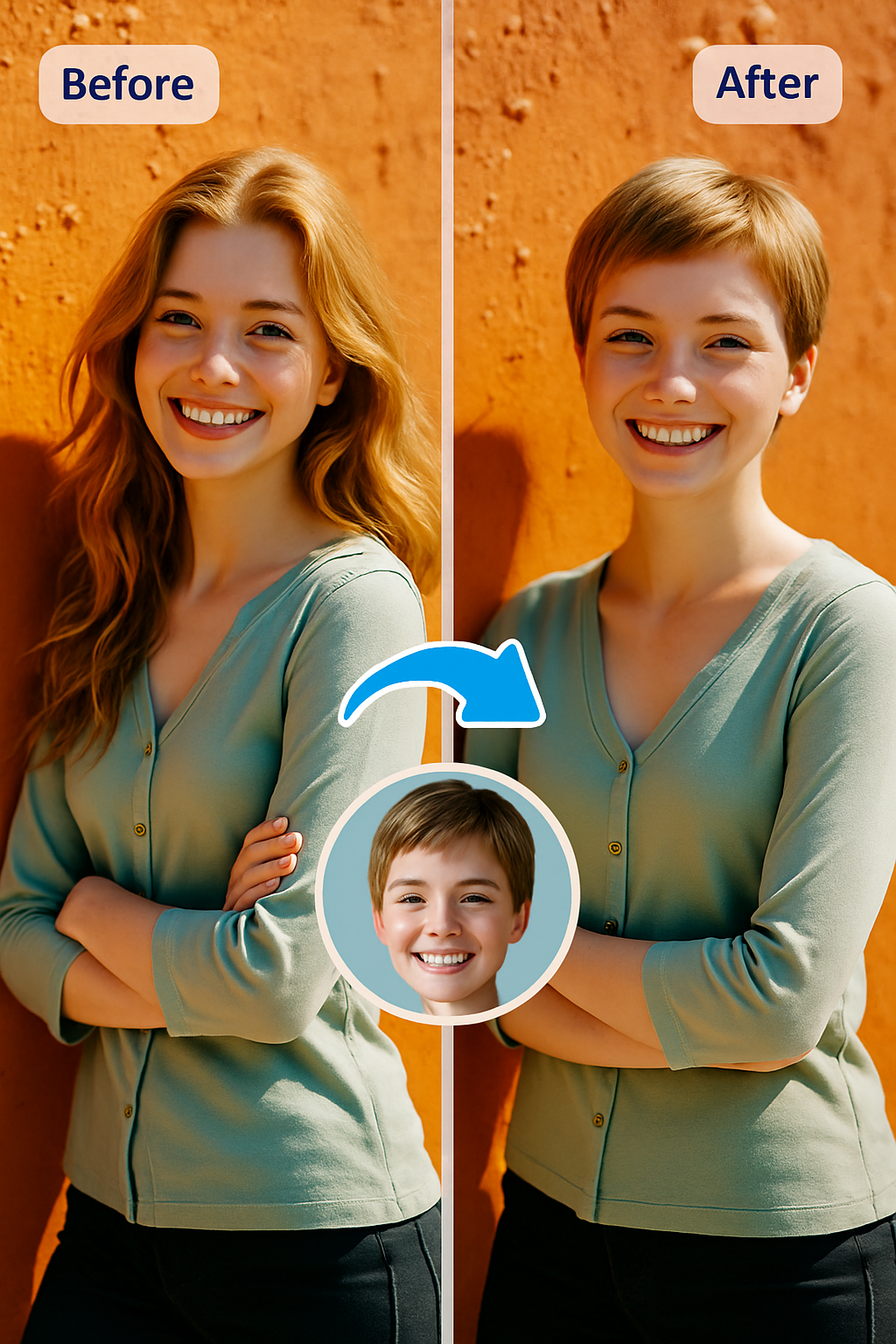
Experiment without friction. Core swaps stay free while we build premium tiers.
Optimized inference pipeline returns photo swaps in under 10 seconds.
Expression-aware blending keeps faces lifelike and convincing.
Just upload and click swap — no editing skills or plugins required.
From memes to marketing, tailor content for every audience.
Defense-in-depth safeguards uploads and generated media end-to-end.
Content stays private — never shared with third parties without consent.
Clear policies and easy data deletion controls keep you in charge.
The faceswap.com.de AI tool is ready in your browser today. Upload, swap, and share stunning results within seconds.
Desktop AI faceswap software is rarely "free" when you account for the full cost. Here is the realistic breakdown.
| Cost factor | Desktop Software | Web Tool (this) |
|---|---|---|
| GPU hardware | NVIDIA RTX 3080+ recommended (~$500–1,500) | None — runs in cloud |
| Setup time | 2–8 hours for first working run | 0 — open and go |
| Software license | Often free but GPU drivers, CUDA, Python required | Included in plan |
| Monthly infrastructure | Electricity + hardware depreciation | $0–59/month |
| Updates | Manual — can break existing workflows | Automatic, no disruption |
| Multi-device support | Licensed machine only | Any device with browser |
| Training time (video) | Hours to days per model | N/A — instant |
| Support | Community forums only | Email + chat on paid plans |
| Feature | Desktop (DeepFaceLab etc.) | Web (faceswap.com.de) |
|---|---|---|
| Single image faceswap | ✓ Excellent | ✓ Excellent |
| Video faceswap | ✓ Full support | Coming soon |
| Max output resolution | Depends on GPU VRAM | 4K on Premium |
| Custom model training | ✓ Advanced | ✗ Not available |
| Batch processing | ✓ Scriptable | Credit-based batches |
| No GPU required | ✗ | ✓ |
| Works on Mac/Linux | Limited | ✓ Any browser |
| Time to first result | 2–8 hours | < 1 minute |
| Free to try | ✓ (hardware cost) | ✓ (3 free swaps) |
| API access | Local Python API | Coming soon |
If you currently use DeepFaceLab, FaceSwap, or a similar desktop tool for single-image swaps, here is a direct migration path.
Identify your current desktop use cases
List the specific tasks you do with desktop software: single image swaps, batch jobs, video processing, or custom model training. Web tools currently cover single-image swaps at a level comparable to desktop. Video support is roadmapped.
Test the same input on both tools
Take a source/target pair you know works well in your desktop software and run it through the web tool. Compare the output quality at full resolution. For most portrait swaps, the difference is negligible.
Audit your workflow for GPU-dependent steps
If your pipeline includes custom model training or very long video sequences, desktop software still has advantages. For everything else — single images, short clips, rapid iteration — web tools are faster and cheaper.
Calculate the cost crossover point
Add up your monthly hardware depreciation, electricity cost, and time spent on maintenance. Compare that to a Pro ($20/month) or Premium ($59/month) web plan. For most individual creators, the web plan is cheaper within the first month.
Run both tools in parallel during transition
For the first month, use the web tool for new projects while your desktop tool handles in-progress work. This gives you a real production comparison without disrupting ongoing commitments.
Archive your desktop references and models
Keep your trained desktop models and reference libraries archived. If you ever need custom video training, you can return to desktop tools for that specific use case while using the web tool for everything else.
Not necessarily. Modern web-based AI faceswap tools run on cloud infrastructure with dedicated GPUs, delivering output comparable to — or better than — most desktop software. The web approach also eliminates installation, updates, and hardware requirements.
Beyond the license fee, desktop software requires a dedicated GPU ($300–$1500), regular manual updates, maintenance time, and single-device limitation. Web tools typically cost $20–$59/month with no hardware overhead and automatic updates.
For single-image face swaps, web tools now match or exceed most local software outputs. Local software like DeepFaceLab has advantages for very long video training runs, but for photo and short-clip use cases, web tools are competitive and far faster to use.
For desktop software, yes — a dedicated NVIDIA GPU is typically required for acceptable performance. Web-based tools run inference in the cloud, so no local GPU is needed. Any device with a browser works.
Browser-based tools have the lowest barrier: open the page, upload, swap, download. Desktop AI software like DeepFaceLab or FaceSwap requires Python, CUDA setup, model training, and configuration — a process that can take hours for new users.
AI faceswap tools are legal for personal use, creative projects, and entertainment. Legal issues arise when used to create non-consensual intimate imagery, deepfake misinformation, or identity fraud. Always obtain consent from the people whose faces appear in your output.
For "ai faceswap software", the core audience is desktop software users evaluating whether to migrate to an AI-powered web alternative. Their immediate objective is to find software-level output quality and reliability without local installation overhead. This query reflects action-ready demand with low tolerance for setup friction. This means the page must prioritize execution and quality assurance before marketing narrative.
Top-ranking pages often repeat feature lists but underdeliver on operational detail. To outperform that pattern, this page connects search intent to an actionable runbook, measurable quality checks, and direct tool access on faceswap.com.de.
Input preparation determines output success for ai faceswap software. Source guidance: reuse your best desktop-tested reference images to benchmark web output on equal terms. Target guidance: test with the same targets used in desktop workflows to produce a fair side-by-side result. These two rules alone remove a large share of failed first runs.
Operationally, this keyword depends on single-image blending and high-detail visual quality. Teams should define a minimum input quality bar before rendering so credits are spent on valid tests instead of avoidable retries.
The recommended workflow for ai faceswap software is compare web versus desktop on quality, speed, cost, and maintenance burden before switching. Use web-first execution flow with predictable run-state feedback so creators can run, review, and iterate without switching tools or environments.
Every run should end with a clear decision: accept, rerun with one controlled change, or discard. Treat reruns as controlled experiments with explicit pass criteria. This keeps iteration fast and explainable across team members.
Before any export, inspect output parity with desktop tools and reliability under real production workload conditions. Add baseline checks for face alignment, tone blending, and artifact visibility near high-contrast edges. If one critical check fails, rerun before publishing.
For teams managing multiple creators or editors, encode these checks in a shared review template. Consistent QA language reduces subjective approval loops and improves accepted-output rate over time.
The most repeated content pattern in this SERP is generic coverage with shallow execution detail. For ai faceswap software, the gap is AI software pages focus on feature lists without addressing migration costs or desktop-to-web transition planning. Filling that gap improves both user completion and ranking defensibility.
A practical SERP-surpass approach is to combine intent mapping, detailed workflow steps, failure-case recovery, and direct tool usage in one page. Search engines reward pages that solve the full job-to-be-done rather than partial intent fragments.
Successful output from ai faceswap software should map to a concrete publish destination. Recommended channel mix: professional production pipelines and studio-grade creative workflows. Channel-aware QA helps prevent rework caused by mismatched format expectations.
Publishing should include version notes: source set, target set, run date, and accepted quality result. This creates an audit trail that makes future optimization faster and more reliable.
To turn ai faceswap software into a repeatable production stream, define scale rules early. Monetization guidance: calculate total cost including GPU hardware, maintenance time, and updates versus web plan fees. Cost model framing: throughput planning tied to accepted-output rates.
Track three weekly metrics: accepted-run ratio, average turnaround time, and publish frequency. These indicators show when to keep experimenting, when to standardize, and when to expand plan capacity.
A sustainable ai faceswap software workflow requires explicit governance. Baseline rule: software-based workflows often require stricter asset tracking and consent documentation. Add ownership logging for every uploaded asset and maintain a retention policy for generated files.
Teams that operationalize consent, rights tracking, and policy boundaries reduce legal risk while improving editorial confidence. Governance is not friction; it is the control layer that supports reliable long-term scaling.
Use this appendix section to store real production evidence for ai faceswap software: winning reference sets, rejected attempts, and corrections that improved acceptance rates. Replace abstract copy with project-level proof so the page remains stronger than shallow SERP competitors.
For desktop software users evaluating whether to migrate to an AI-powered web alternative, update this note with measurable outcomes from faceswap.com.de: accepted-run ratio, turnaround time, and publish impact. Evidence-backed guidance usually ranks better and converts better than static feature descriptions.